

Vaping has become part of everyday teen life. It shows up at school, online, and in social settings. Many teens see it as low risk or easy to quit.
That assumption is wrong.
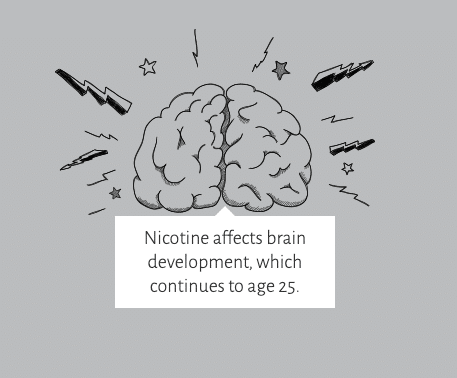
Today’s vaping products deliver nicotine in ways that can quickly change how a teen’s brain works. What may feel like “casual use” can turn into cravings and loss of control faster than many families expect.
 For parents and caregivers, the risk is not just experimentation. It is how early nicotine use can shape habits that are hard to break later in life.
Vaping was designed as an aid to help people quit smoking traditional cigarettes, and it has helped many people quit the harmful habit. Unfortunately, the intended “healthier alternative” has also contributed to millions of teenagers getting hooked on nicotine for potentially the rest of their lives.
Some important things to know about nicotine and the teenage brain:
- It tricks the brain into actually craving harmful chemicals.
- It permanently alters the way brain synapses are developed, which can harm the parts of the brain that control focused attention.
- It can also cause mood disorders and permanently lower impulse control.
Buckle up — we’re just getting started.
E-cigarettes also have a flavoring that can contain chemicals linked to lung disease:
- Benzene (which is found in car exhaust)
- Toxic metals like nickel, tin, and lead. Vaping can
- Often contain other toxic chemicals like acrylonitrile, propylene oxide, and crotonaldehyde.
Teenagers who vape will likely use other tobacco products like regular cigarettes, cigars, and chewing tobacco.
They are more than 4X more likely to start smoking cigarettes within 18 months than those who don’t vape.
Most adults who struggle with nicotine addiction started young. Once the brain adapts to nicotine, quitting becomes much harder.
Parents and educators play a critical role here. Clear information and ongoing conversations can help teens think ahead, understand risk, and make healthier choices before patterns form.
The earlier those conversations start, the more impact they can have.
Do you know how many teenagers used e-cigarettes in 2024 alone?
2.13 Million teens, according to the 2024 National Youth Tobacco Survey.
Those are 2.13 million kids who are now much more likely to struggle with a lifetime of addiction issues. And many of them are preventable.
90% of lifelong addiction struggles start during the teen years.
If you’d like to dig deeper into vaping, read our in-depth article: Everything You Need To Know About This Risks Of Vaping.
What can parents do to prevent their teen from vaping?
For parents and educators who care about kids, we can start with awareness and focus on education. Most kids have faulty ideas about the dangers of vaping, and we can correct that. We can share the facts with them, not in a one-time conversation but reinforced through several conversations over time.
Fast Facts About Vaping and Nicotine
-
Most vapes contain nicotine, and it targets the teen brain.
Nicotine is highly addictive, and most e-cigarettes contain it. In teens, nicotine can interfere with attention, learning, mood, and impulse control, skills they rely on every day at school and in life. -
Nicotine can hook teens faster than many expect.
Young people can show signs of addiction after very limited vaping, sometimes before regular use even begins. Because the teen brain is still developing, it is especially sensitive to nicotine and learns dependence more quickly. -
Vapes are often used for more than nicotine.
E-cigarettes can also deliver other substances, including cannabis. Nearly one in three middle and high school students who had ever used an e-cigarette reported using marijuana in the device. -
Most lifelong tobacco use starts young.
Tobacco use is the leading cause of preventable disease and death in the U.S. About 9 out of 10 adults who currently smoke started before age 18, which is why prevention during the teen years matters so much. -
Today’s nicotine is designed to be more addictive.
Research shows teens can experience cravings, withdrawal symptoms, and a loss of control after very small amounts of nicotine. Some report signs of addiction within days or weeks, not months. Modern nicotine products are stronger and harder to quit than ever before.
How to Start the Conversation About Vaping
-
Create a safe space.
Let your child know they won’t get in trouble for being honest. -
Listen first.
Be patient. Ask questions. Try to understand their perspective before sharing yours. -
Skip the lecture.
The goal is a conversation, not a warning speech. Avoid criticism or overreacting. - Choose natural moments.
Kids listen more when conversations feel casual. Instead of saying “we need to talk”.
How to Find those Natural Moments to Start the Conversation About Vaping
Kids are more open when conversations feel casual and connected. Instead of setting up a formal talk, try starting small during everyday moments like:
-
Watching a TV show, movie, or social media clip where someone is vaping
-
Passing a vape shop, convenience store display, or gas station
-
Hearing about vaping at school, sports practice, or from friends
-
Seeing vaping discussed in the news or online
-
Riding in the car, walking the dog, or doing something side by side
Conversation Starters That Keep It Open
You don’t need the perfect words. A simple, curious question can go a long way.
-
“I keep seeing vaping show up everywhere. What do you think about it?”
-
“When you see kids vaping, do you think it’s more about curiosity, fitting in, or something else?”
-
“Does vaping feel like a big thing at your school, or not really?”
-
“If a friend offered you a vape, what do you think would be the hardest part about saying no?”
If the Conversation Gets Short or Awkward
That’s okay. The goal is not to cover everything at once.
-
Thank them for sharing.
-
Share one thought or fact, then pause.
-
Let them know you’re always open to talking more.
Example:
“That makes sense. I’m glad you told me. If you ever want to talk more about it, I’m here.”
What Can Educators Do About Vaping?
Vaping is not limited to after-school hours. It shows up on campus, near entrances, in bathrooms, and in hallways. Educators often notice vaping behavior long before families do.
Understanding what is behind that behavior matters. Since nicotine affects the developing teen brain, this means a student who keeps returning to vaping may not be making casual choices. Their brain may already be seeking nicotine.
When educators understand this, they can respond with support instead of defaulting to discipline. It creates space for conversations that build trust, encourage reflection, and help students think more clearly about their choices.
This approach strengthens relationships and supports healthier decision-making, both in and out of the classroom.
How Educators Can Use These Conversations at School
Conversations about vaping do not need to be formal lessons. Many effective moments already happen during the school day.
These discussions fit naturally into:
-
Advisory or homeroom
-
Health or SEL lessons
-
Small group conversations
-
One-on-one check-ins
What matters most is tone. Curiosity and respect go further than correction.
Conversation Starters That Work in School Settings
Educators can use simple, reflection-based questions to guide discussion.
Try prompts like:
-
“When vaping comes up at school, what do students usually think about it?”
-
“Why do you think vaping feels normal to some people your age?”
-
“What makes it harder for students to say no in social situations?”
These questions invite thinking without putting students on the spot.
How These Conversations Support Student Skills For Life
Talking about vaping is also a way to build core skills students use every day.
These conversations support:
-
Decision-making
-
Recognizing pressure
-
Managing impulses
-
Speaking up for themselves
Those skills matter far beyond this one topic.
You can also show kids and students this 3-minute video from Natural High Storyteller, PhD and Comedian, Matt Bellace. He lays out the truth about vaping and encourages the younger generation ‘not to be the experiment’ in big tobacco’s newest effort to sell harmful products.
We can be watchful, too. Research shows that parental monitoring of our kids’ whereabouts, relationships, and activities is a protective factor against harmful substance use.
Most importantly, we can be healthy role models, avoiding e-cigarette use ourselves since what gets modeled often gets repeated.
Keep the Conversation Going
These small, everyday conversations matter more than one big talk. When kids feel heard and supported, they are more likely to make healthy choices, even when faced with pressure.
If you’re looking for support, Natural High offers free, research-backed resources to help parents and caregivers:
-
Understand today’s risks around vaping and nicotine
-
Build skills for ongoing, age-appropriate conversations
-
Help teens develop confidence and purpose that protect them long-term
Prevention starts with connection. And you don’t have to do it alone.